AI Won't Kill Creativity. But Depending on It Will.
AI Won't Kill Creativity. But Depending on It Will.
Most people debating AI are asking the wrong question.
The question is not whether AI is good or bad. The question is what happens to your brain when you stop using it.
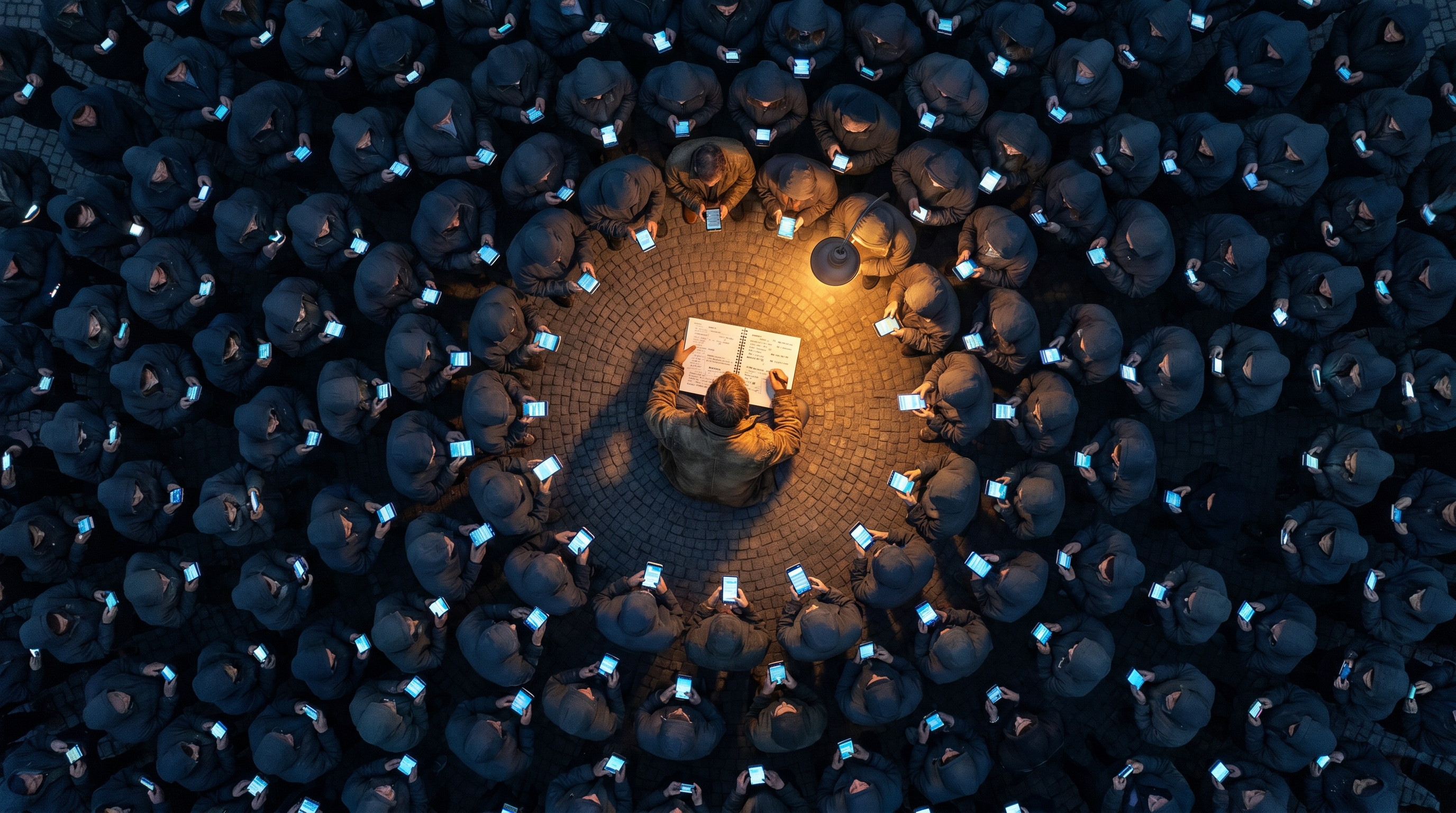
Because right now, millions of people are outsourcing their thinking to AI tools. And they feel productive. They feel fast. They feel like they're winning.
They are not winning.
What Sugar-Coating Hides
AI feels helpful. That is exactly the problem.
When something removes friction, your brain stops building the muscle that friction was training. Every time you ask AI to write your idea instead of thinking it through yourself, you lose a small piece of that ability. Not in one session. Not even in a month. But over time, the cognitive decline is real.
This is what makes AI more dangerous than most people admit. It does not feel like a threat. It feels like a shortcut.
Sugar-coating is the real risk. Not the technology itself.
The Retention Loop Nobody Talks About
I have been watching this happen in real time. Not in a lab. Just through four years of daily use and watching the people around me.
Here is what I have seen. Every time you depend on AI to write your thoughts, you feed the system signal about what keeps you engaged. The system learns to keep you coming back. You learn to need it. The loop closes.
You do not notice your own independence shrinking because the output feels like yours. But it is not. It is a remix of what the algorithm thinks you want to say.
Using AI as a Therapist, Doctor, or Your Brain Is a Bad Idea
There is already a growing consensus: do not use AI as a therapist, doctor, or lawyer. These decisions need human judgment.
But the conversation rarely goes one level deeper.
Do not use AI to think.
Use it to test your thinking. Use it to challenge ideas you already have. Use it to organize research you have already done. That is leverage. That is how a tool works.
When you use AI to replace thinking rather than accelerate it, cognitive ability decreases over time. Gradually. Like a muscle that stops being used.
What I Have Seen After Four Years of Using AI Daily
I started using AI tools when GPT first launched in 2022. I have used them every day since. I still do. I create with them, build with them, and think alongside them.
But I have also watched people around me change over those four years. The ones who leaned on it hardest early are the ones who struggle most now to think through a problem without it. They open the chat before they open their own head.
I wrote about this directly in my AI coding experience — that is where the line between tool and crutch became impossible to ignore.
The effort of thinking is what builds thinking ability. Remove the effort completely, and you remove the training. That is not a study. That is just what I have observed, consistently, over time.
This is worth understanding before making AI your default for creative and intellectual work.
The Creative Boom Is Real. And Most People Will Miss It.
A separation is coming in the market. It is already starting.
People who maintained their ability to think clearly, to write their own ideas, to build something genuinely original will move up fast. The people who spent those same years generating AI content without developing underlying skill will struggle.
Here is why. When every feed is full of AI-generated content, the bar for what counts as real goes up. Audiences get better at filtering signal from noise. Algorithms get better at it too. And what survives is work that has actual human thinking in it.
The creative boom belongs to people who did the cognitive work before AI made it easy to skip it.
What Happens When the Floor Fills with AI Slop
Generic content has a cost beyond being boring.
When the majority of content online is AI-generated, good creators lose motivation to publish. Why compete with machines that run for free and never sleep? Why spend three hours on something original when AI can produce something similar-looking in three minutes?
The problem is that this dynamic harms the people who are actually creating. Not just in engagement. In motivation. In sustainability.
But here is what that creates. Scarcity of real thinking. And scarcity means value.
I covered how serious creators are navigating this shift in AI Content Marketing 2026 — the hybrid workflow that separates people building real leverage from people just generating noise.
The Right Way to Use AI
The sequence matters more than the tool.
Build your cognitive ability first. Learn to think through problems without shortcuts. Write your first draft yourself. Form your own opinion before you ask AI to refine it.
Then use AI as a forcing function. Let it challenge your reasoning. Ask it to find the weakest part of your argument. Use it to move faster once you already know where you are going.
This is the difference between AI as a tool and AI as a replacement.
If you want to see the sequence in practice, my AI SEO content workflow is built exactly on this principle — thinking first, AI second, every time.
Should You Use AI for Creative Work?
Yes, with conditions.
Use AI to generate options. Not to make the final creative call. Use it to explore directions quickly. Not to skip the judgment required to choose one. Use it to write faster when you already know what you want to say. Not to figure out what you think.
Creativity is the act of forming something original from your own perspective and experience. AI cannot do that. It can only recombine what already exists.
If you hand over the creative act itself, you are not creating. You are curating someone else's output and calling it yours.
Frequently Asked Questions
Does using AI make you less creative over time?
Using AI as a replacement for creative thinking can reduce the cognitive habits that support creativity. Using it as a tool while maintaining independent creative practice does not have the same effect.
Is AI bad for content creators?
AI is not inherently bad for content creators. The risk is dependency. Creators who use AI to move faster on work they already understand have an advantage. Creators who use AI to skip the work of developing skill and perspective are building on a weak foundation.
What does AI dependency mean for the content industry?
As AI-generated content fills more of the web, the scarcity of genuine human perspective increases. This will likely create a bifurcated market where work that demonstrates clear original thinking and expertise stands apart from generic AI output.
How should you build a creative career in an AI era?
Develop your core abilities first. Build a genuine point of view. Understand the subjects you cover deeply enough to have original opinions. Then use AI to accelerate execution, not to replace the thinking that makes your work worth reading.
The hard work you do should come from you. Your ideas, influenced only by what you have actually lived and learned. Not by a generic feed of someone else's thinking that an algorithm decided you should see.
That is the foundation. Build it first. Then build on top of it.
Follow me for more: LinkedIn | Instagram | X | Round Table